


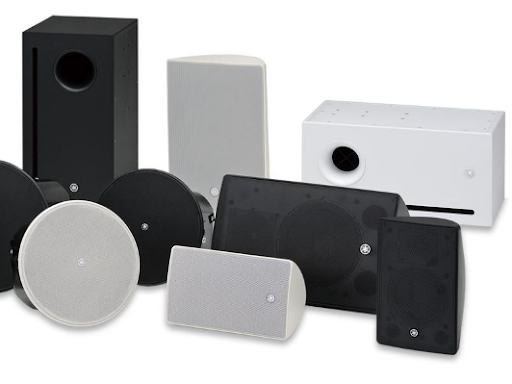

Open-plan environments present a unique challenge for sound design because they lack clear acoustic boundaries. Offices, co-working spaces, showrooms, and public facilities often rely on openness to encourage movement and interaction. At the same time, this openness allows sound to travel freely, making inconsistencies far more noticeable. In such settings, success is not defined by how loud a system can play, but by how evenly sound is experienced throughout the space.
Uniform sound does not mean identical sound everywhere. Different zones still serve different purposes, but transitions between them should feel natural rather than abrupt. Achieving this balance starts with understanding how people occupy the space. Seating density, movement paths, and task areas influence where sound needs to be present and where it should remain subtle. Designing without observing these patterns leads to systems that feel uneven, regardless of equipment quality.
One frequent issue in open-plan layouts is reliance on too few sound sources. Installing a small number of high-output units creates strong sound near the source and weak coverage elsewhere. This approach exaggerates volume differences as people move around. A distributed approach, using more sources operating at lower levels, produces smoother coverage. In these scenarios, commercial audio speakers are often selected for their ability to deliver consistent output without drawing attention to their presence.
Ceiling treatments and furnishings strongly affect uniformity. Hard surfaces reflect sound, while soft materials absorb it. In open spaces, these materials are rarely consistent across the entire area. One section may include carpets and acoustic panels, while another features glass and concrete. Without compensating for these differences, the same audio level produces very different listening experiences. Adjusting speaker spacing and orientation helps counteract these variations more effectively than increasing volume.
Height and angle play a subtle but important role. Speakers mounted too high may project sound broadly, creating reflections and reducing clarity near the floor. Speakers placed too low may create hot spots and shadowed areas. Uniformity improves when sound is aimed deliberately at listener height, even if that requires more complex mounting solutions. Commercial audio speakers designed for flexible installation make these adjustments easier without compromising appearance.
Another challenge lies in overlapping coverage. When multiple speakers cover the same area without coordination, phase interactions occur. These interactions cause certain frequencies to reinforce while others cancel out, leading to uneven tonal balance. This problem often appears as people report sound changing as they move only a few steps. Careful spacing and level matching reduce these effects and stabilise the listening experience.
Background activity also influences perceived uniformity. Conversations, movement, and equipment noise fluctuate throughout the day. Areas that seem balanced during quiet periods may feel uneven once the space becomes active. Designing with this variability in mind prevents overcorrection later. Commercial audio speakers that maintain clarity at moderate levels help preserve uniformity as ambient conditions change.
Control systems contribute significantly to consistency. Manual adjustments made in response to complaints often create new imbalances elsewhere. Centralised control allows gradual, proportional changes across zones rather than reactive fixes. This approach supports uniformity over time rather than chasing individual problem areas.
Aesthetic considerations can also affect outcomes. In open-plan environments, speakers are often expected to blend into the architecture. This sometimes leads to compromises in placement that prioritise appearance over performance. While discretion is important, uniform sound depends on acoustic logic. Selecting commercial audio speakers that offer both visual integration and predictable coverage helps resolve this tension.
Testing remains essential. Uniformity cannot be confirmed from a single listening position. Walking the space, listening at different heights and distances, reveals how sound behaves across the environment. Small adjustments in level or angle often produce significant improvements. This process ensures that design intent translates into lived experience.